
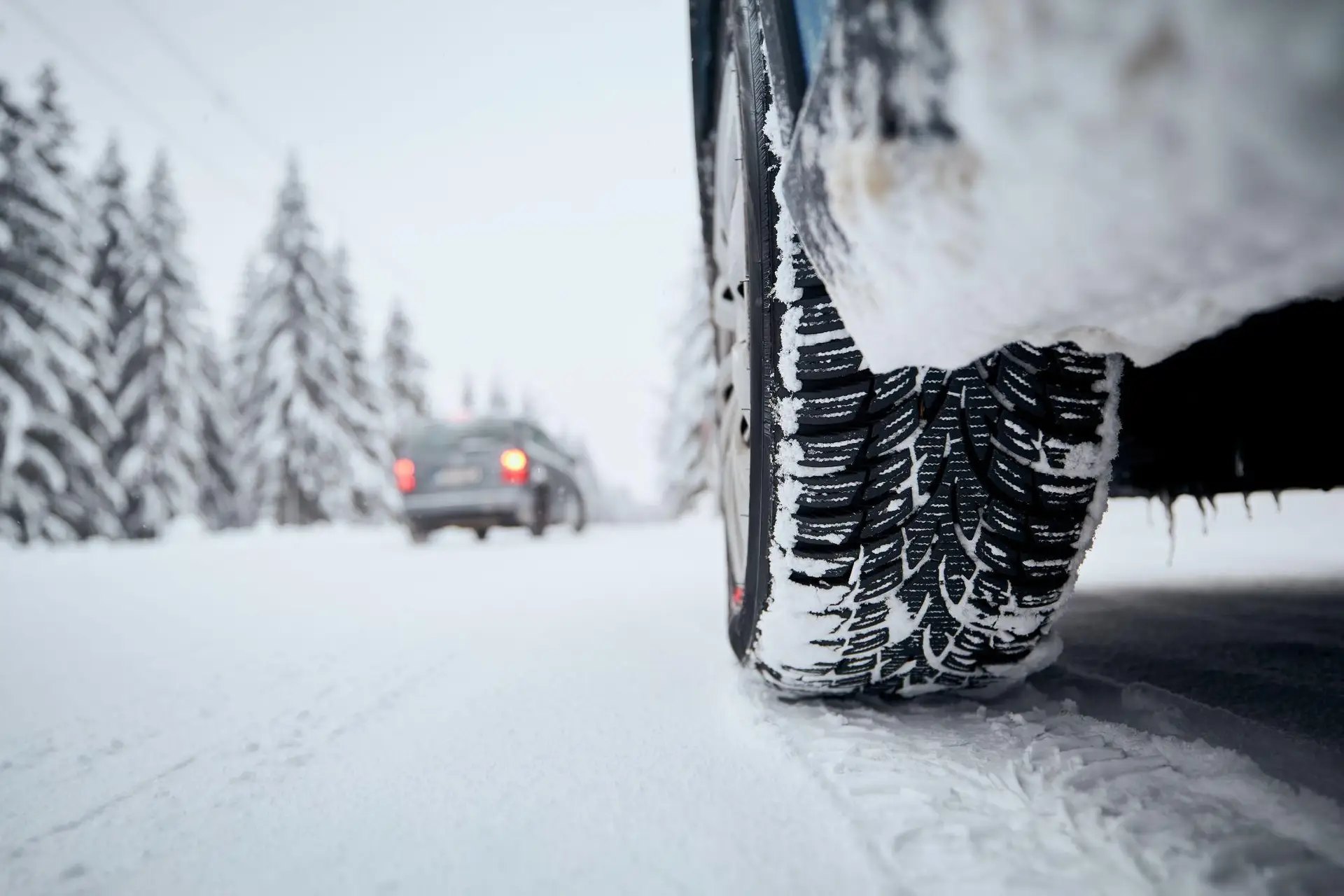
March around Peterborough refuses to commit. You can drive to work in a t-shirt on Tuesday and scrape frost off the windshield on Wednesday, and that swing is exactly why so many drivers leave winter tires on far longer than they should.
The decision is not really about snow. It is about temperature, because temperature is what the rubber compound in a winter tire is engineered around.
The 7-for-7 rule beats the calendar
A winter tire compound stays pliable below roughly 7 °C, which is what gives it grip on cold pavement that an all-season cannot match. Above that threshold the same softness works against you: the tread squirms, steering response goes vague and stopping distances on warm, dry asphalt get longer, not shorter.
The practical benchmark most Canadian motoring organisations use is seven consecutive days with daytime highs at or above 7 °C. In Peterborough that window usually lands between late March and mid-April, but it moves by a couple of weeks year to year, so watch the forecast rather than the date.
What leaving them on actually costs
Running winter tires through a warm spring is expensive in a quiet way. The soft compound heats up on dry pavement and wears at a rate you will notice next November when the tread is down to 5 mm and the set you expected to get four seasons out of gives you three.
- Accelerated, often uneven tread wear across the whole set
- Longer warm-weather stopping distances and softer steering feel
- More road noise and a measurable drop in fuel economy
- A tire less able to cope with pothole season, which follows every local winter
Inspect before you store, not after
The changeover is the one moment each year when all four winter tires are off the vehicle and in good light. Use it. The legal minimum tread in Canada is 1.6 mm, but a winter tire loses most of its snow traction below about 4 mm, so that is the number worth measuring against if you want the set to be useful next season.
We also look for sidewall cracking, bulges, and wear patterns that point at something other than the tire — inner-edge feathering usually means alignment, cupping usually means worn suspension components.
Make one visit do the work of three
While the wheels are off, a rotation of your summer or all-season set costs almost nothing in extra labour and evens out wear across all four corners. An alignment check at the same time catches the toe and camber changes that a winter of frost heaves and curbs quietly introduces.
4 Aces Auto Center handles seasonal changeovers, balancing, rotation and alignment at 485 Parkhill Rd E, and we will tell you honestly if your winters have another season in them.